One Accident Can Stop an Operation
18 May 2026 · 4 min read
Goods moving in and out. Forklifts operating constantly. Wagons arriving against tight schedules. Staff working around live operations every hour of the day.
And while every site operates differently, the pressure is usually the same. Keep products moving efficiently, protect people and assets, and avoid costly disruption.
At Fastline Services our teams work inside warehouse and logistics environments every day. We see first hand how demanding these operations are and how quickly small issues can turn into major operational problems when safety systems are unclear, damaged, or no longer fit the way a site operates.
Because the reality is simple.
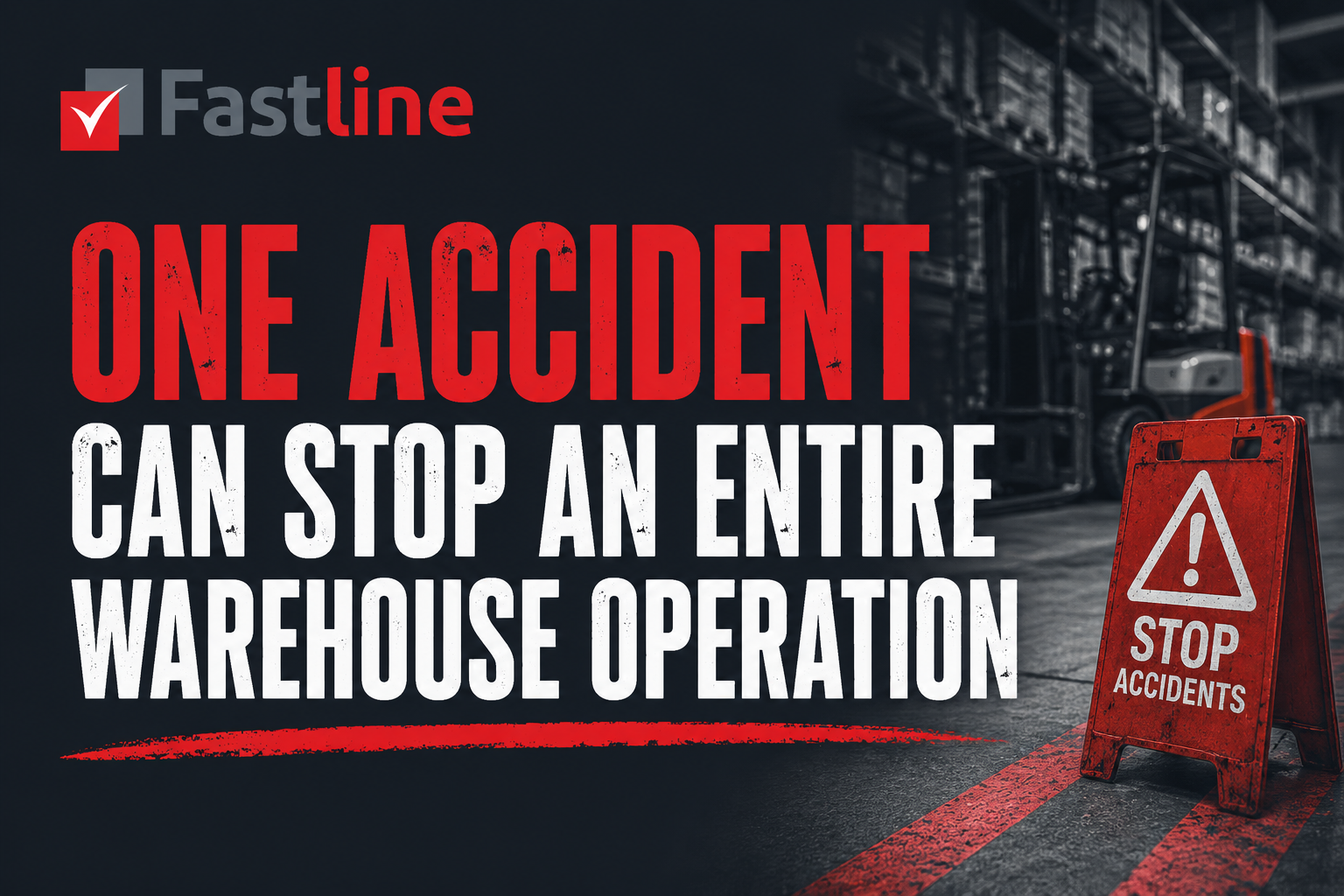
It only takes one accident to stop everything.
The biggest cost is usually the disruption
When people think about warehouse accidents, they often focus on the immediate damage. Repairs, paperwork, investigations, or insurance claims.
But in most warehouse environments, the real cost is operational disruption.
The moment an incident happens, the entire site changes pace. Vehicle movement slows down, access routes become restricted, staff are redirected, and loading schedules begin to fall behind. Even relatively small incidents can create wider operational pressure across multiple departments.
And in fast moving logistics environments, delays spread quickly.
One blocked area can affect forklift movement across an entire warehouse. One damaged section of flooring can create congestion around loading points. One investigation can force operations to divert staff and resources away from productive work.
We’ve seen it happen across distribution centres, manufacturing sites, storage facilities, and logistics hubs throughout the UK.
Different layouts. Different systems. Different operational pressures.
But usually the same outcome once disruption starts to build.
Warehouses depend on clear structure
The most efficient warehouse operations are rarely the loudest or busiest. They are usually the most organised.
Clear pedestrian routes, well managed vehicle systems, visible loading zones, and properly maintained surfaces all help warehouses function more efficiently day to day. When movement throughout a site is structured properly, staff can work confidently and vehicle operators can move safely without unnecessary confusion or delay.
The problem is that warehouse environments constantly evolve.
Traffic levels increase. Racking layouts change. Operational flow adapts. Storage areas expand. But in many cases, the original safety systems no longer match the way the warehouse currently operates.
Over time, line markings fade, surfaces deteriorate, and traffic routes become less defined. Businesses often adapt around these issues gradually without fully recognising how much additional risk and inefficiency they are creating across the site.
That’s usually where problems begin.
Most problems start small
One thing experience teaches you in this industry is that warehouse accidents rarely happen completely without warning.
More often, there are smaller issues building up in the background over time. Poor visibility around traffic routes. Worn floor markings. Unclear pedestrian walkways. Congested loading areas. Busy crossover points between vehicles and people.
Individually, they may not seem serious.
But inside high pressure operational environments, small risks have a habit of becoming much larger problems when movement increases and pressure builds across the site.
When accidents happen, the impact rarely stops with the initial incident itself.
Operations slow down. Equipment gets damaged. Delivery schedules become harder to maintain. Staff confidence drops and internal pressure increases while businesses try to recover lost time.
Suddenly the focus shifts from running the operation efficiently to reacting to disruption.
Safety directly affects performance
People work better when they feel confident in their environment.
You can usually tell immediately when a warehouse is well organised. Movement flows naturally, traffic systems make sense, and staff understand where they should and shouldn’t be operating. The site feels controlled.
That confidence matters more than many businesses realise.
Warehouse safety is not just about compliance requirements or passing inspections. It directly affects the way people work every day. When environments become unclear or difficult to navigate safely, hesitation increases. Staff become more cautious around vehicle movement, congestion builds around operational areas, and productivity often slows down without businesses fully recognising why.
Good warehouse environments remove unnecessary friction from daily operations.
That benefits safety, efficiency, and operational consistency at the same time.
Reputation is built on the shop floor
Warehouse environments also shape how businesses are perceived externally.
Clients, visitors, auditors, contractors, and delivery partners all notice when sites are poorly maintained or difficult to navigate safely. Faded markings, damaged surfaces, and unclear traffic systems quickly create the impression of disorganisation and poor operational control.
On the other hand, organised warehouse environments demonstrate professionalism, structure, and attention to detail.
In logistics and warehousing, those things matter.
Prevention will always cost less than downtime
The most effective warehouse operations do not wait for accidents before reviewing site safety.
They focus on prevention.
That means maintaining clear traffic management systems, reviewing pedestrian segregation, keeping warehouse markings visible, identifying hazards early, and ensuring operational layouts continue to support the way the site actually functions day to day.
At Fastline Services , we help businesses create safer, more efficient warehouse environments designed around real operational demands.
Because when you work on warehouse sites every day like we do, you see exactly how quickly one accident can stop an entire operation.
Need expert help with your warehouse?
Our safety team is ready to survey your site and recommend the right solution.
Request a Quote